Datarails vs. Pigment

The Pigment Alternative

Built for Finance Teams

Pigment replaces spreadsheets with a centralized modeling engine and proprietary formula structure. It is built for custom, cross-functional modeling environments that require architectural design.
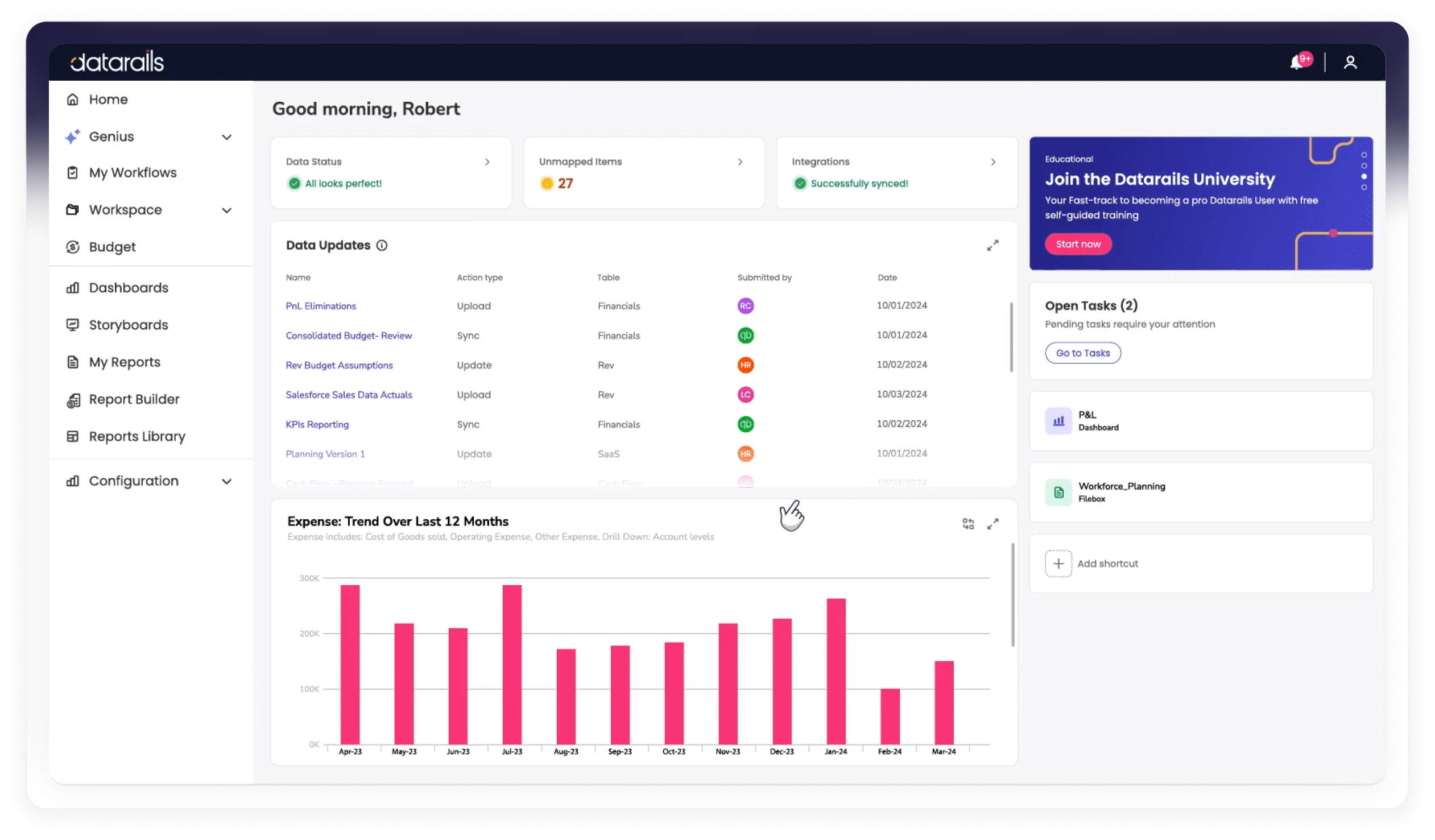
Datarails runs consolidation, planning, reporting, and cash visibility inside Excel. It enhances how finance already works instead of replacing it.


What distinguishes between the two platforms isn’t capability, but complexity, adoption lift, and long-term ownership.

See Datarails in Action

Trusted by finance teams Join 1000+ FP&A teams already using Datarails

Capability
datarails dark logo-1
66d1772009f1a1cb15e366ea_Pigment logo
Finance workflow
Built around native Excel workflows
Requires adopting a new modeling environment and formula structure
Time to value
Live in weeks with reporting and consolidation operational
Long rollout with architectural planning and model design
Learning curve
Minimal training required
Steep ramp due to proprietary syntax and aggregation logic
Native integrations
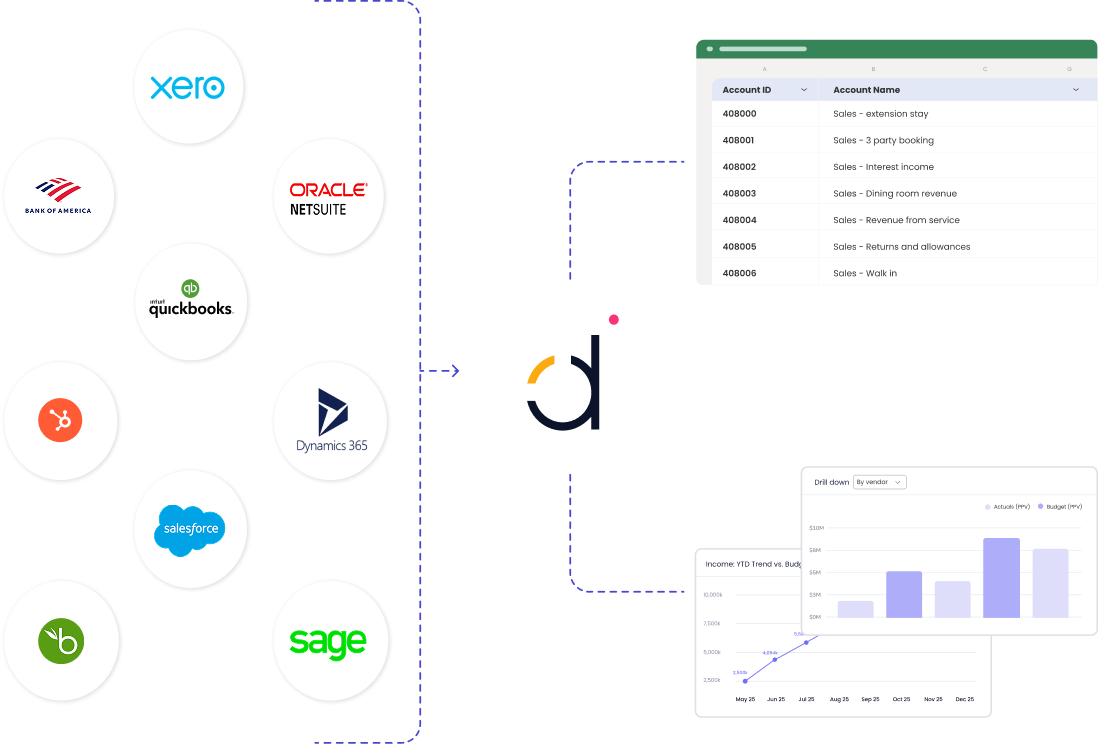
600+ native integrations across finance stack
Smaller native connector library with heavy API configuration
Historical data migration
Seamless import of existing Excel models and prior financials
Models need to be configured inside the platform
Consolidation
Embedded multi-entity consolidation with eliminations and FX
Configurable but requires structured model setup
Ownership
Finance-owned
Requires model governance and technical oversight
Ideal use case
Finance teams seeking automation and control without process disruption
Organizations prioritizing modeling architecture over workflow continuity

The planning tool problem

Pigment was designed for RevOps and GTM teams — not finance. Their models require a dedicated "builder" to configure and maintain. Their AI runs inside their platform, not on your consolidated financials. And when your team reaches for Excel, Pigment has no answer.

Datarails was built for finance teams. Native Excel integration, full consolidation, governed AI on your actual data, and self-service workflows your finance team manages without a builder or a consultant.

What you’re missing out on

Same rating, different adoption reality

Both platforms hold the same G2 rating. The difference is in user experience.
Datarails reviewers consistently highlight fast deployment, intuitive usability, and measurable impact on reporting and budgeting cycles.
Pigment reviewers emphasize modeling flexibility, but frequently reference ramp-up time, configuration effort, and the need to learn proprietary modeling logic.
Both platforms are well-rated, but the adoption experience is where Datrails leads by far.

Advanced modeling without rebuilding finance

Pigment delivers real time scenario modeling and fully customizable structures. That flexibility comes with a proprietary modeling language and aggregation logic that differs from Excel. 
Finance teams must learn new syntax, make architectural decisions, and commit to ongoing technical oversight.
Datarails retains Excel as the working layer and adds governance, consolidation, forecasting, and AI-powered insights on top. Teams gain automation and control without relearning how to model.
Both platforms support advanced modeling, but the learning curve is materially different.

Architected rollout vs finance-led deployment

Pigment requires structured rollout, architectural planning, and internal model ownership. Organizations need to be prepared to dedicate resources to ongoing model design and governance.
Datarails implementations are finance-led and measured in weeks. Teams go live with reporting, consolidation, dashboards, and automation already in place. In-house support continues beyond onboarding, minimizing administrative burden.

The strategic difference: Pigment vs Datarails

Pigment is designed for organizations willing to adopt a new modeling framework and manage added structural complexity in exchange for deep customization.
Datarails is built for finance teams that want consolidation, reporting automation, planning depth, and centralized data control without abandoning Excel. It delivers faster time to value and lower adoption friction while maintaining enterprise-grade capabilities.
If your priority is execution, usability, and scalable finance infrastructure that supports how your team already works, Datarails is the more practical solution.

Datarails: Made for real finance workflows, not planning demos

No builder required

Pigment models don't maintain themselves — every change goes through a dedicated builder or consultant. Datarails gives finance teams direct control. Modify workflows, update mapping logic, adjust models, without a ticket, a consultant, or a queue.

Excel-native, not browser-only

Pigment's entire bet was that finance would leave Excel. It hasn't. Datarails works where your team already works — the Flex add-in and DR.GET formulas bring governed data directly into Excel. No retraining, no new interface, no migration.

AI that works on your data, not their platform

Pigment's AI runs on whatever you've loaded into their model. Datarails FinanceOS connects to your ERP, CRM, and HRIS, consolidates it with your mapping logic, and exposes it to any AI tool you prefer. The answer is trustworthy because the data behind it is finance-grade.

Finance depth, not just planning

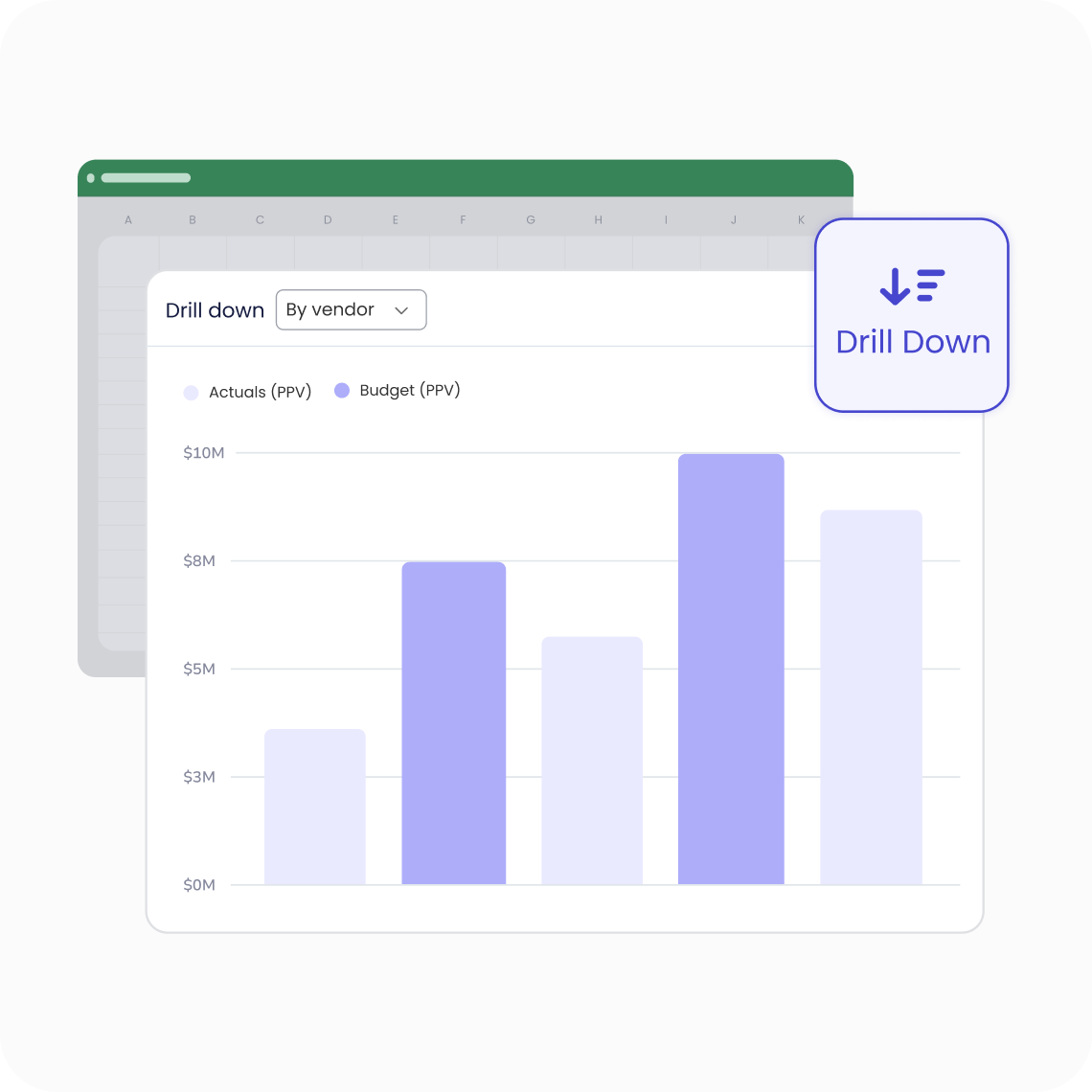
Pigment is strong at scenario modeling. It wasn't built for multi-entity consolidation, FX translation, intercompany eliminations, or cell-level audit trails. Datarails handles the full consolidation stack — and every number drills back to the source transaction.
Live-reporting-planning@2x
Frame-1437254026@2x
Group-1410115999
Connect-8 (1)

Learn why finance teams choose Datarails

Badge Badge Badge Badge

Don’t just take our word for it

“Without Datarails, I would’ve needed to double my current team of three just to produce what we’re delivering today”

Steven Carkey VP Finance Operations, 100%
100logo_2021-01-22-10-57-34-1

“Thank goodness we went with Datarails, because there’s no way we’d be where we are as a team.”

Charlotte Kelly Head of FP&A, Butternut Box

“Datarails gives us a single source of truth. That kind of visibility changes everything.”

John Smith CFO, CDG

FAQ

Yes. Full scenario and what-if modeling in Excel, on live governed data. No builder needed to reconfigure the model when assumptions change.

Growth creates consolidation complexity — new entities, new geographies, multi-currency reporting, headcount spread across systems. That's exactly where finance teams outgrow Pigment and need the depth Datarails provides.

Pigment has a beautiful interface. But finance teams don't live in dashboards — they live in Excel, board decks, and audit packs. Datarails puts the output where it's actually used.

Most customers are live on Datarails before their Pigment contract expires. We connect directly to your source systems - no data migration from Pigment required. Typically live in 6–12 weeks, with your finance team in the driver's seat.

Ready to leave Pigment behind?

Join 1,000+ finance teams who switched to Datarails for version control, workflow automation, and professional-grade visualizations.